
From protein pudding to protein cheese to protein pasta – protein-rich products are hugely popular and are supposed to make us slimmer and more muscular. But what is really true? Is it a hype or is it really true? And if so, how much protein should we consume per day? We tell you this and more in this blog post.
Content:
- What are proteins?
- What is the function of proteins in the body?
- Misconception: 0.8 grams of protein per kg body weight per day
- Calculate protein requirement: This is how much protein the body really needs per day
- Tips to meet your protein needs
- Benefits of a high-protein diet
- What are the consequences of a protein deficiency?
- Conclusion on the question "How much protein per day is recommended?"
- FAQ: The most frequently asked questions about "How much protein per day is recommended?"
What are proteins?
Proteins and a protein-rich diet are known to everyone and have long been an integral part of a conscious and healthy lifestyle. But what exactly are proteins?
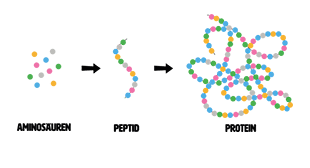
Proteins, also called protein, are macronutrients, or macros for short, along with fats and carbohydrates. They can consist of 21 different amino acids and, depending on their combination and pattern, result in a different protein with different functions. The amino acids are linked together by peptide bonds and form a long chain, called a polypeptide.
Our body can produce most amino acids itself, so they are not essential. These include:
- Alanine
- Arginine
- Asparagine
- Aspartic acid
- Cysteine
- Glutamine
- Glutamic acid
- Glycine
- Proline
- Serine
- Selenocysteine
- Tyrosine
However, nine of the amino acids are essential, meaning they are essential for our survival. Since the body cannot produce them itself, we must get them through food. These include: [$1]
- Isoleucine
- Leucine
- Lysine
- Methionine
- Phenylalanine
- Threonine
- Tryptophan
- Valine
- Histidine
What is the function of proteins in the body?
The question would probably be, "Which one isn't?" Because, as we have already mentioned, proteins and amino acids are essential. As building blocks, they are found in every cell in our body – from muscle cells to hair cells.
We have summarized the most important features for you:
Enzyme: Many proteins act as enzymes and catalyze biochemical reactions in the body. Enzymes accelerate the chemical reactions necessary for metabolic processes, digestion, DNA replication and other vital functions.
Structural protein: Proteins serve as structural building blocks in our body and form the framework of many tissues and cells. Collagen, for example, is a protein-based structural protein found in skin, bones and tendons. Another example is keratin, a component of hair and nails.
Transport proteins: As the name suggests, certain proteins have the function of transporting molecules or ions through the cell membrane. A well-known example is hemoglobin, which binds oxygen in red blood cells and transports it to the tissues.
Regulation: Proteins can influence gene activity by binding to DNA and regulating the transcription (reading) of genes. Transcription factors are proteins involved in the regulation of gene expression.
Defense proteins: These include, for example, antibodies, which play an important role in the immune system. They can recognize and fight antigens and thus protect our body from, for example, viruses.
Motor proteins: Proteins such as actin and myosin are crucial for muscle contraction and enable the movement of cells and entire organisms.
Hormones: Some proteins act as messengers or receptors and are involved in the transmission of signals between cells. Hormones such as insulin, for example, are proteins that act as signaling molecules and regulate metabolism.
Misconception: 0.8 grams of protein per day per kg body weight
For a long time, the claim persisted that 0.8 grams of protein per kg of body weight per day was more than sufficient. We do not want to devote too much space or text to this hypothesis, as it does not align with current scientific knowledge.
Calculate protein requirement: This is how much protein the body really needs per day
So, what is the optimal amount of protein? Numerous experts, such as Dr. Peter Attia, Dr. Layne Norton, Prof. Dr. Stuart Phillips, and Dr. Eric Helms, recommend 2 grams of protein per kg of body weight to build and maintain muscle, for example during dieting phases, to reduce body fat, and to support health. [$2]
Multiply your body weight by 2 and you have calculated your optimal protein requirement.
Example: A person weighing 80 kilograms:
80 kilograms * 2 = 160 grams of protein per day
Tips to meet your protein needs
It can be quite a challenge to meet your calculated daily protein needs while maintaining a varied and healthy diet, but it doesn't have to be. We have collected a few tips for you to help you:
Make sure each meal contains a protein source: for example, start your day with a portion of protein in the morning, such as quark or delicious protein pancakes. In a hurry? Then we recommend our Protein Pancake & Waffle Mix.
This brings us directly to the point: it is important to spread your protein intake throughout the day. This optimizes protein synthesis in your body and ensures a constant supply.
Instead of chips, chocolate and the like, you should opt for protein-rich snacks: nuts, yogurt, hard-boiled eggs or even protein bars. Speaking of which: have you tried our Vegan Protein Bites yet?
[[PRODUCTS-]]protein pancake mix, vegan protein bite, chunky cookies[[-PRODUCTS]]
In addition to quantity, the quality of proteins is also important. Make sure you choose and combine high-quality protein sources to increase your chances of getting all essential amino acids.

And last but not least, protein products can also help you meet your protein needs: creamy protein shakes with Total Protein, refreshing protein soft drinks with our More Clear Whey Isolate, deliciously tasty brownies with our brownie mix, crunchy protein wraps and much more. Our products help you enjoy protein-rich, varied and truly delicious meals without missing out on anything.
[[PRODUCTS-]]more protein,more clear,total vegan protein brownie bowl [[-PRODUCTS]]
Benefits of a high-protein diet
The benefits of a high-protein diet are numerous. We have summarized them for you:
 1. Muscles: Proteins are essential for building and repairing muscle tissue. Sufficient protein intake not only helps us build, but also maintain muscle mass.
Foods with a lot of protein
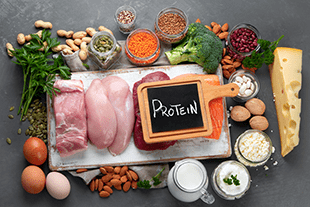
Now we know the benefits of a high-protein diet. We'll show you the best protein sources:
Meat & Poultry
Meat consists largely of muscle fibers, making it a high-protein food. For example, a beef fillet contains almost 30 grams of protein per 100 grams.
Fish and seafood
Fish is also one of the best sources of protein. Smoked salmon, for example, provides about 23 grams of protein per 100 grams, in addition to valuable omega-3 fatty acids.
Eggs and dairy products
We all think of low-fat quark first, and rightly so: it contains 10.6 grams of protein per 100 grams. But cheeses like Emmental and Parmesan are also among the top sources. Just like chicken eggs, with about 13 grams of protein per 100 grams.
Legumes and vegetables
Peas, beans, tofu and other vegetables are rich in fiber and protein. Cooked lentils contain up to 11 grams of protein per 100 grams. Vegetables such as spinach, broccoli and cauliflower also provide your body with valuable proteins.
Nuts and seeds
Nuts and seeds are a must on the list of high-protein foods: pumpkin seeds, for example, contain 35.6 grams of protein and peanuts 26 grams of protein per 100 grams. But be careful: nuts and other seeds are high in fat and should be consumed in moderation, not in large quantities.
Cereals and flour
In addition to complex carbohydrates and fiber, oatmeal also provides a decent amount of protein: 13 g per 100 g! Flours such as wholemeal spelt flour, with 15.6 g of protein per 100 g, are also considered top sources of protein.
What are the consequences of a protein deficiency?
As we have learned, proteins are an essential nutrient for our body and are involved in many different processes. The consequences of a protein deficiency can therefore be severe: visually, a protein deficiency can manifest itself in dry skin, thin hair and brittle nails. Internally, it can manifest itself in constant fatigue, concentration problems, listlessness and a lack of energy, whether during sports, at university, in the office or in everyday life. This can in turn lead to serious and long-term diseases such as depression, heart problems, severe inflammation and more.
Conclusion on the question "How much protein per day is recommended?"
We knew that a high-protein diet was important for our health, but we didn't know exactly how important. Whether it's for our hair and nails, muscle building, weight loss or simply our general health – we set ourselves the goal of consuming 2 grams of protein per kg of body weight daily for optimal nutrition. The only question is: should we start with a brownie bowl or a creamy, delicious protein pudding?
FAQ: The most frequently asked questions about "How much protein per day is recommended?"
[[FAQ]]
[ITEM-]
[Q-]How much protein do I need to build muscle? [-Q]
[A-]Whether you want to build or maintain muscle, the recommendation is 2 grams of protein per kg of body weight. Try to meet your needs and supplement your diet with complex carbohydrates and fats. A small calorie surplus of about 200 kcal is also recommended for muscle building. Take it easy and find out what works for you.[-A]
[-ITEM]
[ITEM-]
[Q-]How much protein do I need to lose weight?[-Q]
[A-]As with muscle building, we recommend consuming 2 grams of protein per kg of body weight. This ensures that you do not lose muscle mass. Protein also contributes to a longer feeling of satiety.[-A]
[-ITEM]
[ITEM-]
[Q-]How much protein do I need per day if I weigh 60 kg?[-Q]
[A-]According to experts, it is recommended to consume 2 grams of protein per kg of body weight. For 60 kg, that is 120 grams of protein.[-A]
[-ITEM]
[ITEM-]
[Q-]How do I get 100 grams of protein per day?[-Q]
[A-]First of all, the question arises: why do you want to consume exactly 100 grams of protein?! You can easily meet your protein needs with protein-rich foods such as poultry, nuts, fish, cereals and the like. If you find it difficult to consume 100 grams or more of protein, our protein products can help you.[-A]
[-ITEM]
[[-FAQ]]
Sources:
[[SOURCES]]https://www.zentrum-der-gesundheit.de/ernaehrung/naehrstoffe/aminosaeuren/aminosaeuren
https://peterattiamd.com/category/nutritional-biochemistry/protein/
https://pubmed.ncbi.nlm.nih.gov/36575144/[[-SOURCES]]