
Inu-what? Or is it about insulin? No, we're actually talking about inulin. Don't know it? No problem, in this blog post, we'll tell you what's behind the mystery of inulin, how it works, and how you can benefit from it. Let's get started!
Contents:
- What is inulin?
- What is the effect of inulin?
- Inulin effect on the intestines
- Inulin effect on the liver
- Inulin effect on skin and hair
- Does inulin help with weight loss?
- Inulin effect on blood sugar levels
- Is inulin safe during pregnancy?
- Foods containing inulin
- Possible side effects of inulin
- What symptoms indicate an inulin intolerance?
- Conclusion on the effect of inulin
- FAQ: Frequently asked questions about the effects of inulin
What is inulin?

Most of us are probably familiar with insulin. But what is inulin? We'll explain it now: inulin is a water-soluble fiber that consists of fructose as a building block and is found in many plants. It is a prebiotic, which means it contributes to a healthy and balanced gut flora by supporting good gut bacteria - but more on that later.
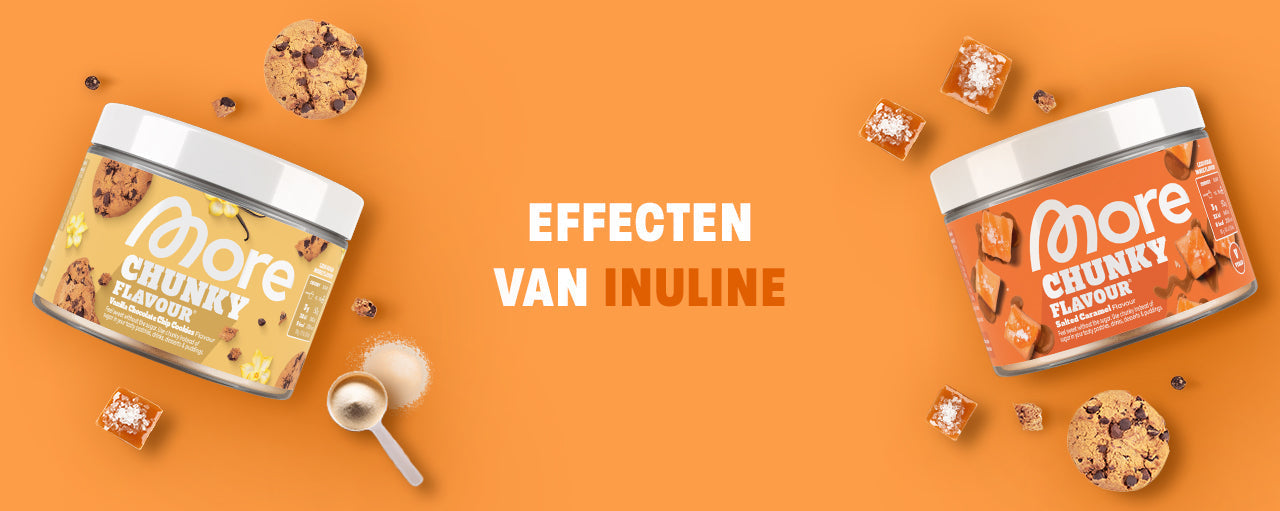
But that's not all, because inulin is also a natural sweetener. Does inulin sound familiar to you? We'll give you a hint: we use inulin in our Chunky Flavor flavor powder, our ultimate way to save sugar!
[[PRODUCTEN-]]chunky-smaak[[-PRODUCTEN]]
But back to the topic: like other fibers, inulin reaches the large intestine unchanged, where it is fermented by the bacteria living there. This produces short-chain fatty acids that serve as an energy source for the intestinal cells and can support a healthy gut flora. But inulin can do even more...
What is the effect of inulin?
We've already given you a taste of it, and now we want more: below, we'll take a closer look at how inulin works. Small spoiler: we're surprised, and we bet you will be too.
Inulin effect on the intestines
Let's start with the most obvious: inulin promotes gut flora health. It seems that healthy gut bacteria prefer fructose molecules, so they can use them as an energy source. This allows beneficial bacteria like bifidobacteria to spread and crowd out pathogenic bacteria. [$1] In addition, inulin can stimulate digestion and relieve constipation by binding moisture, causing it to swell, and thus bringing about its positive effects.
By the way: According to the EFSA, a daily dose of at least 12 grams of natural inulin, obtained from chicory, helps to maintain normal bowel function and increase its frequency.[$2]
Inulin effect on the liver
A diseased liver, such as fatty liver, can affect your entire metabolism. The good news: you can support your liver with inulin, because the fiber stimulates the production and excretion of intestinal hormones, which in turn counteracts fatty liver and strengthens liver function. To achieve this, you can take 1 teaspoon of inulin daily.
Inulin effect on skin and hair

Beauty lovers, take note: inulin can protect both skin and hair from moisture loss, thus providing more shine and suppleness. Quickly check the ingredients of your hair care products.
Does inulin help with weight loss?

Like other fibers, inulin binds water and swells up. This can make you feel fuller for longer and help you lose weight. It can also slow down gastric emptying, which, according to a Canadian study, reduces the amount of appetite-stimulating hormones. Another advantage is that inulin contains hardly any calories. BUT: Neither inulin nor fiber will make you lose weight. To lose weight, you need to be in a calorie deficit.
Inulin effect on blood sugar levels
This can be particularly interesting for diabetics, as inulin can keep blood sugar levels constant.
Let's summarize again, because in addition to the substances mentioned, inulin also has a positive effect on:
- gut health and gut flora
- intestinal lining
- inflammation
- immune system
- blood sugar levels
- lipid metabolism
- Fatty liver and liver function
- skin and hair
- satiety
Is inulin safe during pregnancy?
Inulin supports a healthy gut flora and the immune system. However, there is always discussion about the safety of prebiotics for pregnant women – regardless of whether they are natural or in food supplements. It is advisable to consult your doctor or midwife before using them.
Foods containing inulin
Now we know how inulin works. The question is how we can consume it. To save you searching, we have put together a list of foods that contain inulin:
- Jerusalem artichoke
- Dandelion root
- Yacon root
- Chicory root
- Garlic
- Brown onion
- Artichokes
- Shallots
- Leeks
- Asparagus
- Barley, rye, wheat
- Banana
- Beetroot
- Brussels sprouts
- Honeydew melon
- Nectarine
- Peach
- and many more
Possible side effects of inulin
Since inulin is a vegetable fiber, the known side effects of inulin are limited. In rare cases, flatulence and diarrhea have been reported.
Does inulin cause bloating?

As we already know, inulin is rapidly fermented by gut bacteria. Although it is supposed to support the intestines, a sensitive or irritated stomach or intestines may react with flatulence or even diarrhea after ingestion.
What symptoms indicate an inulin intolerance?
Inulin is generally safe for most healthy people. However, if your intestines are not used to fermentable carbohydrates, you may experience mild flatulence, as mentioned earlier. Inulin intolerance can also be related to the amount, especially if your intestines are not yet used to it. But even here, there is usually no danger, as we consume only 3 to 11 grams on average.
If you have fructose intolerance or irritable bowel syndrome, the symptoms can worsen and even cause diarrhea. So be careful! We recommend consulting your doctor before using this product.
Conclusion on the effect of inulin
So, we know that anyone who wants to support their gut flora, immune system, etc., should include inulin in their diet. As far as we're concerned, that's best in the form of Chunky Flavor: we can enjoy sweet, delicious creations, an irresistible creaminess, and save on sugar! What are you waiting for?
[[PRODUCTEN-]]chunky-smaak[[-PRODUCTEN]]
What symptoms indicate an inulin intolerance?
Inulin is generally safe for most healthy people. However, if your gut is not used to fermentable carbohydrates, you may experience mild bloating, as mentioned earlier. Inulin intolerance can also be related to the amount, especially if your gut is not yet accustomed to it. But even here, there is usually no danger, as we consume only three to 11 g on average.
If you have fructose intolerance or irritable bowel syndrome, the symptoms can worsen and even lead to diarrhea – so be careful! We recommend consulting your doctor before consumption.
Conclusion on the effect of inulin
So we know that anyone who wants to support their gut flora, immune system, etc. should include inulin in their diet. If you ask us, preferably in the form of Chunky Flavour: that way, we enjoy sweet, delicious creations, an irresistible creaminess, and save on sugar! What are you waiting for?
[[PRODUCTS-]]chunky-flavour[[-PRODUCTS]]
What symptoms indicate an inulin intolerance?
Inulin is generally safe for most healthy people. However, if your gut is not used to fermentable carbohydrates, you may experience mild bloating, as mentioned earlier. Inulin intolerance can also be related to the amount, especially if your gut is not yet accustomed to it. But even here, there is usually no danger, as we consume only three to 11 g on average.
If you have fructose intolerance or irritable bowel syndrome, the symptoms can worsen and even lead to diarrhea – so be careful! We recommend consulting your doctor before consumption.
Conclusion on the effect of inulin
So we know that anyone who wants to support their gut flora, immune system, etc. should include inulin in their diet. If you ask us, preferably in the form of Chunky Flavour: that way, we enjoy sweet, delicious creations, an irresistible creaminess, and save on sugar! What are you waiting for?
[[PRODUCTS-]]chunky-flavour[[-PRODUCTS]]
FAQ: Frequently asked questions about the effects of inulin
[[FAQ-]]
[ITEM-]
[Q-]What are the side effects of inulin? [-Q]
[A-]Inulin is generally well tolerated. However, if you have a sensitive or irritated gut, side effects such as flatulence and diarrhea may occur.[-A]
[-ITEM]
[ITEM-]
[Q-]Is inulin good for the body? [-Q]
[A-]The answer is clear: yes. Inulin is a valuable fiber that can support gut health, the immune system, and more. As with everything, moderation is key. If you have fructose intolerance or irritable bowel syndrome or are unsure, consult your doctor first.[-A]
[-ITEM]
[ITEM-]
[Q-]Is inulin good for the liver?[-Q]
[A-]Again, yes. With inulin, you can support a diseased liver and strengthen its function. The fiber stimulates the production and excretion of intestinal hormones, which in turn counteracts fatty liver and supports liver function. It is recommended to take 1 teaspoon of inulin daily. However, we also recommend consulting a doctor beforehand.[-A]
[-ITEM]
[ITEM-]
[Q-]How long does it take for inulin to work? [-Q]
[A-]This cannot be generalized, as it also depends on you as an individual and the amount of inulin.[-A]
[-ITEM]
[[-FAQ]]
Sources:
[[QUELLEN-]]https://www.spektrum.de/lexikon/ernaehrung/inulin/4480
https://www.efsa.europa.eu/de/efsajournal/pub/3951[[-QUELLEN]]